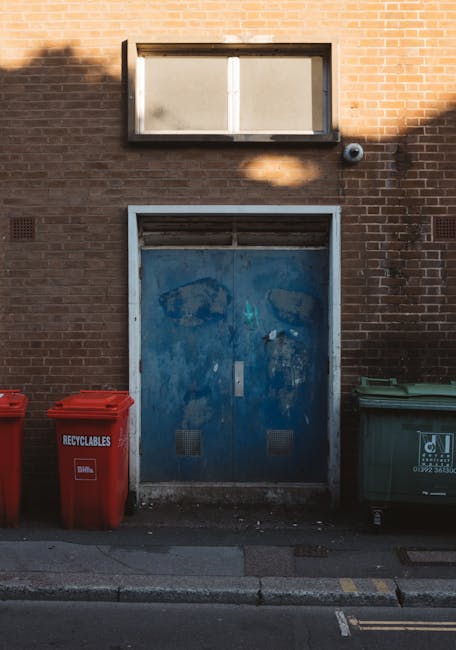
Kilburn guide to Brent council rubbish rules

If you live, work, or manage a property in Kilburn, rubbish rules can feel oddly specific until the moment you get them wrong. One missed collection, one bag left beside the wrong bin, one bulky item dumped at the wrong time-and suddenly you are dealing with clutter, complaints, or a messy doorstep that nobody wants to look at on a Monday morning. This Kilburn guide to Brent council rubbish rules is here to make the whole thing clearer, calmer, and much more practical.
In plain English, we will cover what the local rules generally mean in day-to-day life, how collections and disposal usually work, what to do with bulky items, and where people most often slip up. We will also look at sensible alternatives when council rules are not enough, especially for flats, households, landlords, and small businesses trying to keep things moving without drama.
To be fair, rubbish management is one of those things nobody thinks about until the bin is full, the hallway is crowded, or the neighbours are getting twitchy. Let's fix that now.
Why Kilburn guide to Brent council rubbish rules matters
Rubbish rules matter because waste is one of the easiest things to get wrong and one of the quickest things to cause friction. In a place like Kilburn, where you have flats, shared entrances, terraced homes, side streets, and busy commercial stretches all close together, waste issues show up fast. A black bag left in the wrong place looks untidy. A broken chair in a communal hallway is an obstruction. A fridge abandoned beside a wall becomes everybody's problem.
Good rubbish habits also save time. If you know what goes where, you do not waste an afternoon shuffling bags around or waiting for a collection that never quite fits your plan. And if you are a landlord, letting agent, or small business owner, you know this already: waste problems are rarely just waste problems. They become complaints, access issues, cleaning costs, and sometimes awkward phone calls you could really do without.
There is another side to this too. Proper disposal supports recycling, keeps shared spaces usable, and helps reduce fly-tipping pressure in local streets. That sounds a bit grand, maybe, but it is true. One sensible household at a time adds up.
If you need a broader view of managed clearance options, our waste removal service overview may help you compare what is practical for your situation. For homes that need a bigger reset, home clearance or house clearance can be a much easier route than trying to solve everything with bin day alone.
How Kilburn guide to Brent council rubbish rules works in practice
Brent council rubbish rules are really a set of expectations around how residents and businesses present waste, separate recyclables, and dispose of items that do not belong in everyday household bins. The exact arrangements can vary by property type, collection day, and waste stream, so the safest habit is to treat the rules as local and operational rather than one-size-fits-all.
In practice, most people are trying to answer a few simple questions:
- What can go in the normal bin or sack?
- What needs recycling or separate disposal?
- What counts as bulky waste?
- What is hazardous or restricted?
- When do I need a specialist clearance instead of a standard collection?
That last question is the one many people underestimate. A full flat move, a loft clear-out, or an office refresh can produce a mix of cardboard, furniture, old appliances, broken storage, and items that simply will not fit the routine collection model. That is where planning matters. If you know in advance that a sofa, mattress, or fridge is involved, you can avoid leaving it half on the pavement with no clear plan. Nobody enjoys that look. It is a bit of a universal household panic, really.
As a rule of thumb, keep waste streams separated as much as possible, present items neatly, and do not assume that "it will be fine" is a safe strategy. In small jobs, tidy presentation can make all the difference. In larger jobs, it can be the difference between a smooth pickup and a frustrating delay.
For bigger or mixed loads, it is often worth exploring targeted services like flat clearance, furniture clearance, or office clearance rather than trying to force everything into standard council rubbish routines.
Key benefits and practical advantages
Following the rubbish rules properly is not just about staying on the right side of local expectations. It also makes life easier in ways people notice immediately.
- Cleaner shared spaces: Fewer bags, fewer odours, less visual clutter at entrances and bins.
- Fewer collection problems: Correctly presented waste is less likely to be overlooked or delayed.
- Better recycling outcomes: The more carefully waste is separated, the more can be diverted appropriately.
- Lower conflict: In flats and HMOs, clear rubbish habits reduce neighbour complaints. Honestly, that alone is worth its weight in gold.
- Safer access: Hallways, bin stores, and pavements stay easier to use for residents, delivery drivers, and visitors.
- Less stress during moves: When you are already juggling keys, boxes, and timing, waste should be the easy part.
There is also a commercial advantage. A well-run office, shop, or rental property looks cared for. Customers notice. Tenants notice. Even if they never mention it, they notice. That sense of order tends to build trust quietly.
If you are dealing with mixed waste after decorating, building work, or a refurb, the most practical option may be builders waste clearance. For shops or desks, archived files, and broken office chairs, business waste removal can be a better fit than trying to improvise with regular bins.
Who this is for and when it makes sense
This guide is useful for just about anyone in Kilburn who has to deal with waste, but some people will feel the benefit more sharply than others.
Residents in flats and shared buildings
If you live in a flat, you usually have less storage space and more dependence on shared bin access. That makes timing, sorting, and presentation more important. A single bulky item can block a corridor or fill a bin store before everyone else has had a chance to use it.
Homeowners and tenants clearing out clutter
Maybe you are doing a deep clean, making room for a new sofa, or clearing out the loft after years of putting it off. That is normal. It is also the stage where people discover they own far more broken lamps and redundant cables than they remembered.
Landlords and letting agents
End-of-tenancy clearances often bring the least tidy version of the waste problem: leftovers, abandoned furniture, bags of unknown contents, and time pressure. The sensible route is usually to act early rather than wait for the next bin cycle to solve it.
Businesses and small offices
Shops, studios, and offices need waste solutions that do not interrupt trading. If you have old display units, packaging, printers, or paperwork, a planned clearance is often cleaner than trying to stack everything in a back room and hoping for the best.
Anyone dealing with one-off awkward items
Fridges, mattresses, sofas, broken wardrobes, and garden waste are classic examples. These are the items that always seem smaller in the shop and larger in the hallway. If that sounds familiar, you are not alone.
Step-by-step guidance
Here is a practical way to handle rubbish and clearance in Kilburn without overthinking it.
- Identify the waste type. Separate everyday rubbish, recycling, bulky items, electricals, and anything hazardous.
- Check what can be collected routinely. Everyday household waste is usually straightforward, but bulky and restricted items need more care.
- Group similar items together. Cardboard with cardboard, furniture with furniture, electronics with electronics. It sounds basic because it is basic, and that is fine.
- Remove anything sensitive. Before disposal, clear paperwork, personal documents, SIM cards, memory sticks, and anything that should not end up in the wrong hands. For secure disposal, confidential shredding can be useful.
- Handle hazardous items separately. Paints, chemicals, gas canisters, and some electrical waste may need special handling. When in doubt, treat them with caution and seek proper guidance through hazardous waste disposal.
- Decide whether the volume justifies a clearance. If you have more than a few bulky pieces, a service-based approach can be faster and tidier.
- Choose a sensible collection method. For some jobs, a standard council route is enough. For others, a dedicated clearance is cleaner, quicker, and less disruptive.
- Prepare access. Make sure stairways, doors, and parking arrangements are workable. Waste removal is easier when nobody has to squeeze a wardrobe past a bike and a plant pot.
- Confirm what is included. Ask how mixed materials, appliance removal, or furniture disposal will be handled before the day arrives.
A tiny bit of planning goes a long way. The difference between a smooth job and a stressful one is often just twenty minutes of sorting before anyone starts lifting.
Expert tips for better results
Over the years, the biggest improvements usually come from small habits, not dramatic overhauls. Here are the ones that make the most difference.
- Keep a "do not bin" box. Put batteries, batteries again, cables, documents, and fragile items in one place before they drift into the wrong bag.
- Break down cardboard early. Flattened boxes take up far less room and are easier to manage.
- Use the space you have properly. In flats, stack carefully and safely rather than spreading waste across every available corner.
- Separate reusable from disposable. A sturdy chair, table, or appliance may be better suited to a clearance or reuse pathway than the bin.
- Plan around heavy items first. Anything bulky or awkward should be dealt with before the smaller loose waste. That order saves a surprising amount of effort.
- Think about smell and damp. Food waste, soft furnishings, and old carpets can start to smell quickly, especially in warm weather or when they sit in a hallway. Nobody wants that by Friday afternoon.
If you are clearing furniture, it can help to look at related disposal options in advance. Furniture disposal is often more sensible than trying to move oversized items a bit at a time. For larger soft items, mattress and sofa disposal is especially worth considering because these pieces are awkward to store and awkward to carry.
A useful rule: if an item feels like it needs two people just to think about it, it probably needs a better disposal plan too.
Common mistakes to avoid
Most rubbish problems come from very ordinary mistakes. That is the annoying bit. They are usually easy to prevent once you know what to watch for.
- Leaving waste loose beside bins. This is one of the quickest ways to create a mess or miss a collection.
- Mixing recycling with general rubbish. It may seem harmless in the moment, but it can undo the separation you have already done.
- Dumping bulky items without planning. Sofas, wardrobes, fridges, and mattresses need proper handling. They do not magically become manageable overnight.
- Ignoring hazardous materials. A bag of unknown liquids or a damaged appliance should never be treated casually.
- Assuming one solution fits every property. A house with a driveway, a third-floor flat, and a business unit all need different waste tactics.
- Forgetting access issues. If collectors cannot get to the waste, the job becomes harder than it should be.
- Waiting until the last minute. This is the big one. Waste always seems easier to deal with tomorrow, until tomorrow is collection day and the item is still leaning against the wall.
Another subtle mistake is treating "out of sight" as "sorted." It is not sorted. It is merely hidden. Different thing entirely.
Tools, resources and recommendations
You do not need a complicated toolkit to manage waste well, just a few reliable habits and practical supports.
- Sturdy bin bags and boxes: Use durable bags for mixed household waste and strong boxes for recyclables or paper.
- Labels or marker pens: Helpful in shared homes or offices where people might mix things by accident.
- Gloves and basic cleaning gear: Especially useful for lofts, garages, and garden clearances where dust and grit build up fast.
- Tape, ties, and straps: Good for bundling cardboard, cable loops, and awkward soft items.
- A simple clearance plan: Write down what stays, what goes, and what needs special handling before you begin.
For people dealing with storage spaces, our related clearance pages can be helpful references. Loft clearance works well for dusty, forgotten items that have accumulated over years. Garage clearance is useful when tools, old paint, and random household leftovers have taken over. For outside spaces, garden clearance may be the better route if branches, bags, and broken outdoor items are involved.
And if you are trying to keep the process tidy from start to finish, it is worth reviewing recycling and sustainability guidance so reusable or recyclable items do not get thrown away by default.
Law, compliance, standards, and best practice
When people talk about rubbish rules, they often mean a mix of local collection expectations, household responsibilities, and sensible waste-duty habits. The important thing is not to guess. If you are dealing with anything unusual, treat compliance as a practical issue, not an afterthought.
In everyday terms, best practice means:
- storing waste safely before collection,
- keeping recyclable and non-recyclable streams separate where possible,
- not placing restricted items in ordinary bins,
- using suitable handling for electricals and appliances,
- and avoiding fly-tipping, even accidentally.
For businesses, the bar is higher because waste is part of operational responsibility. That includes keeping paperwork organised, managing secure disposal where needed, and making sure waste is collected by an appropriate provider. If you are clearing a workplace, the safest route is usually to treat it as a planned project rather than a pile of leftovers to be dealt with later. Later has a way of becoming never.
Special items deserve special care. Fridges, freezers, and other large appliances should not be treated like ordinary junk. If you need help with those, fridge and appliance removal is a more sensible option than trying to wedge them into routine waste channels.
For construction waste, the same principle applies. Heavy rubble, timber offcuts, plasterboard, and packaging should be handled with a plan. If you want a clearer reference point for what belongs in mixed disposal systems, see what can go in a skip. It is a useful comparison even if you are not hiring a skip, because the sorting logic is often similar.
Options, methods, and comparison table
There is no single best way to deal with rubbish in Kilburn. The right method depends on volume, item type, access, and how quickly you need the space cleared.
| Method | Best for | Pros | Watch out for |
|---|---|---|---|
| Routine council collection | Day-to-day household waste and standard recycling | Convenient for regular use, simple to follow | Not suitable for bulky, hazardous, or overfilled waste |
| Bulky item collection | Sofas, mattresses, furniture, single large items | Useful for one-off items, less manual effort | Needs proper booking and preparation |
| Dedicated clearance service | Flats, houses, garages, lofts, offices, mixed loads | Fast, tidy, flexible, handles awkward loads | Requires choosing the right service scope |
| Skip-style approach | Projects with a steady stream of waste | Good for ongoing work and heavier volumes | Space, permit, and item-type considerations may apply |
For many Kilburn residents, the sweet spot is a mixed approach. Use routine collections for everyday waste, then bring in clearance support for the awkward stuff. That keeps things manageable without overcomplicating life.
Case study or real-world example
Here is a very typical local scenario. A tenant moves out of a Kilburn flat and leaves behind a worn sofa, a mattress, several bags of mixed rubbish, and a couple of broken shelves. The hallway is narrow, the stairwell is shared, and the landlord wants the place ready for viewings quickly. The easy mistake would be to keep moving items around the flat for days, hoping the problem shrinks. It rarely does.
Instead, the sensible sequence is:
- identify the bulky items first,
- separate any recyclable cardboard and clean packaging,
- remove anything sensitive or personal,
- decide whether the mattress and sofa need dedicated disposal,
- and arrange a flat clearance rather than relying on ordinary bin capacity.
That approach saves time and keeps the stairwell clear. It also reduces the odds of neighbours complaining about items sitting there "just for a bit," which, let's face it, can easily become three days.
In another common case, a home office gets cleared after a long period of remote work. There are old printers, paperwork, a few chairs, a cracked monitor, and cable clutter in a drawer somewhere. The job is not difficult, but it is fiddly. Using office clearance alongside confidential shredding makes the outcome far cleaner than trying to squeeze it all into the regular waste stream.
Practical checklist
Use this quick checklist before disposal or collection day.
- Have I separated general waste from recycling?
- Are any items bulky enough to need special handling?
- Do I have any electricals, appliances, or hazardous materials?
- Have I removed personal documents and sensitive data?
- Are items packed or stacked safely for collection?
- Is access clear through hallways, doors, stairs, or driveways?
- Do I know whether I need a routine pickup or a dedicated clearance?
- Have I checked whether soft furnishings or appliances need separate disposal?
- Is the waste likely to smell, leak, or deteriorate if I leave it longer?
- Have I chosen the simplest and safest option for the amount I have?
If you can tick most of those off, you are already ahead of the curve.
Get a free quote today and see how much you can save.
Conclusion
Brent council rubbish rules may sound like a dry subject, but in real life they are about keeping homes workable, flats civil, and businesses presentable. For Kilburn residents, the best approach is usually simple: sort waste early, keep it separate where possible, and do not wait until the bin area is overflowing before deciding what to do.
Some jobs fit routine collections neatly. Others do not. Once you are dealing with bulky furniture, mixed waste, appliances, or a full property clear-out, a more tailored clearance route is often easier, safer, and cleaner. That is especially true in a busy London area where space is tight and timing matters.
Done well, rubbish management stops being a headache and becomes just another sorted part of the week. Which, honestly, is a lovely thing.
Frequently Asked Questions
What are the main rubbish rules people get wrong in Kilburn?
The most common mistakes are mixing recycling with general waste, leaving bags beside bins, and putting bulky items out without checking the right disposal route. Shared buildings also struggle with access and timing.
Can I leave a sofa or mattress beside the bins?
Usually not as a casual drop-off. Sofas and mattresses normally need separate collection or a proper disposal arrangement, especially in shared blocks where they can block access.
What should I do with old electrical items?
Electricals should be separated from general rubbish and handled appropriately. Smaller items may need special collection, while larger appliances are often better managed through appliance removal.
How do I know if waste counts as hazardous?
If it includes chemicals, paint, solvents, gas canisters, sharp contaminated materials, or damaged items with unknown contents, treat it cautiously. When in doubt, it is safer to use hazardous waste disposal guidance.
Is a council collection enough for a flat clear-out?
Sometimes, but not always. If you have multiple bulky items, mixed waste, or limited access, a dedicated flat clearance is usually much more practical.
What is the best option for a home office clean-up?
For paper, old electronics, chairs, and general clutter, office clearance combined with confidential shredding is often the neatest solution.
Can builders' waste go with normal household rubbish?
No, not usually. Heavy construction waste, rubble, plasterboard, and renovation debris should be handled separately. Builders waste clearance is the safer choice.
What should I do before a rubbish collection day?
Sort waste by type, break down cardboard, keep access clear, remove sensitive documents, and make sure nothing hazardous has been mixed in by accident.
How can I reduce rubbish problems in a shared building?
Label bins clearly, keep the bin area tidy, avoid overfilling, and make sure residents know what belongs where. A little consistency helps far more than people expect.
Do I need a special service for garden waste?
If it is just a small amount of plant matter, routine disposal may be enough. If you have soil, branches, broken furniture, or a full outdoor clear-up, garden clearance is usually more efficient.
What is the safest way to dispose of a fridge?
Fridges should be handled through proper appliance removal rather than being left with normal rubbish. They are heavy, awkward, and need appropriate processing.
Where do I start if my flat has too much clutter to manage on my own?
Start by separating the obvious categories: general waste, recycling, furniture, electricals, and anything sensitive or hazardous. If the volume is still overwhelming, a home clearance or flat clearance is often the cleanest next step.
If you need help turning a messy waste job into something manageable, the right clearance plan can make the whole week feel lighter. And sometimes that is all people really want: a clean hallway, a clear bin store, and one less thing hanging over them.